
Lower blepharoplasty is a surgical option that removes or repositions the fat behind the lower lid. Tear trough filler is a non-surgical option that adds volume to the groove beneath it. The right choice depends on whether the under-eye area is puffy, sunken, or a mix of both.
Dr. Allan Wulc is board-certified in ophthalmology, plastic surgery, and facial cosmetic surgery and has more than 30 years of practice. At W Cosmetic Surgery in Plymouth Meeting, he evaluates each under-eye concern before recommending a path. This article compares the two options so you know what to ask at a consultation.
Bag or Hollow? The Diagnosis That Decides Treatment
An under-eye bag is a bulge, often caused by fat that has pushed forward as the supporting tissue loosens. A hollow is a groove, known as the tear trough, that deepens as volume shifts and the cheek loses support. Both can cast a shadow, so they are easy to confuse in the mirror.
The distinction matters because the treatments pull in opposite directions. Removing or moving fat suits a bulge. Adding volume suits a groove. Using filler on a true bag may make the area look fuller, while surgery on a simple hollow may not address the shadow at all.
Common signs to discuss with a surgeon include:
- A rounded bulge along the lower lid that suggests a bag
- A shadowed groove running from the inner corner toward the cheek that suggests a hollow
- A bulge sitting directly above a groove, which may call for both approaches
- Soft mounds lower on the cheek, which may be festoons and are treated differently
Because Dr. Wulc trained in ophthalmology, he assesses the lid, the underlying fat, and the cheek together. An in-person exam, along with photographs, usually settles the question.
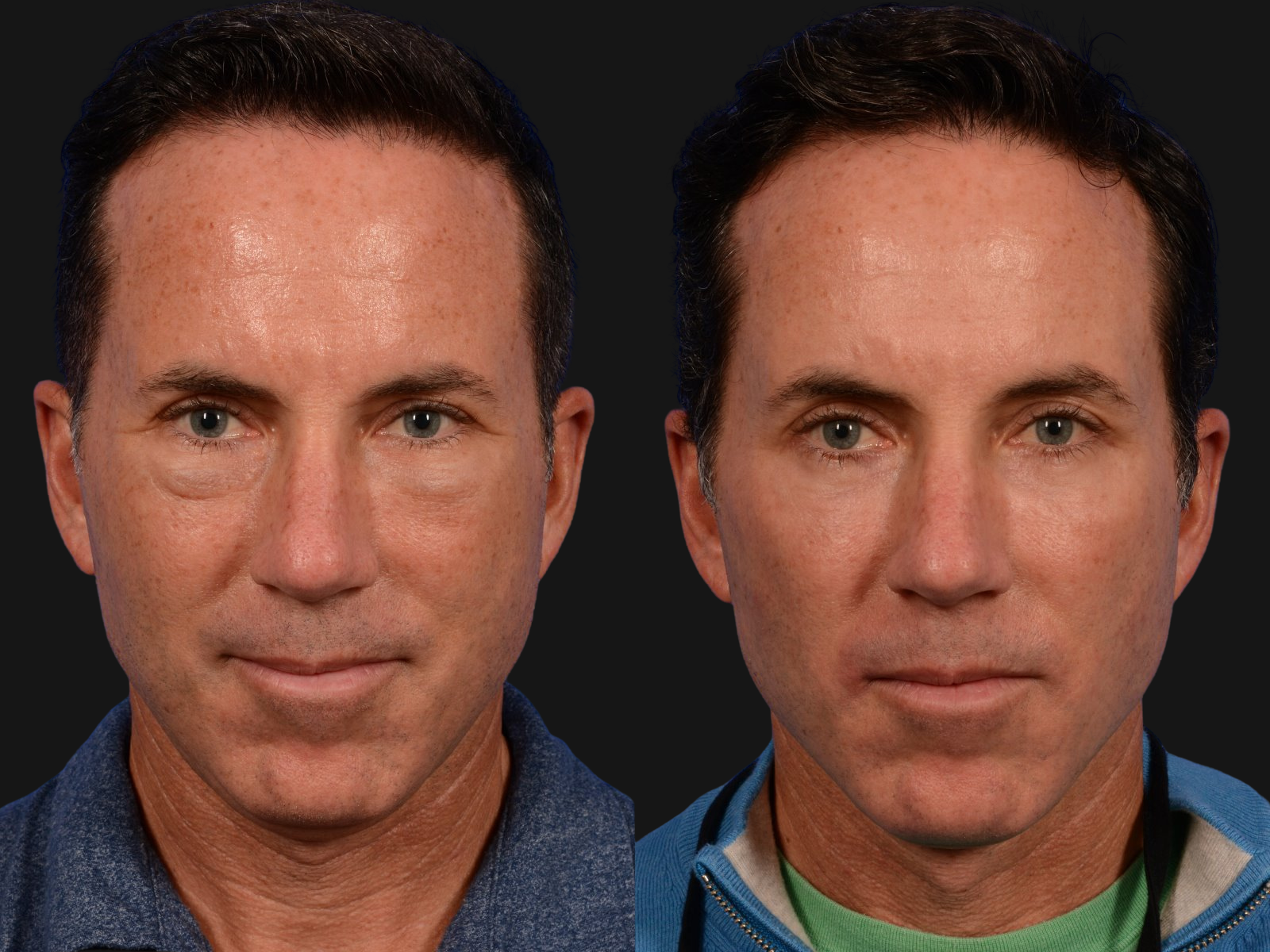
*Real Patient Results - Lower Blepharoplasty by Dr. Allan Wulc
Lower Blepharoplasty vs. Filler at a Glance
Lower blepharoplasty and tear trough filler differ in how they work, how long results may last, and what recovery looks like. The table below summarizes the main points.
|
Lower Blepharoplasty |
Tear Trough Filler |
|
|
Best suited to |
Bulging fat and bags |
Hollows and shadowed grooves |
|
Approach |
Surgery, usually outpatient |
Injections of dermal filler |
|
Visit length |
Roughly 30 minutes to 2 hours of surgery time |
Most filler appointments take 30 to 45 minutes |
|
Recovery |
Bruising and swelling that ease over weeks; many people resume routines within one to two weeks |
Temporary swelling, redness, or bruising that often resolves within a few days |
|
Longevity |
Surgical changes may last longer, though aging continues |
Hyaluronic acid fillers often last 6 to 18 months, and under-eye results can last longer |
|
Main considerations |
Risks include eyelid malposition and dry eye |
Risks include bruising, lumps, and, rarely, vascular occlusion |
Complication rates deserve a straight look. Across 16 studies in a 2025 systematic review of lower blepharoplasty, reported ectropion rates ranged from 0% to 11.3%, and lower-lid retraction ranged from 0% to 4.3% across 9 studies. Plastic and Reconstructive Surgery Global Open reports these ranges, which vary with technique and patient anatomy. Choosing a surgeon with deep eyelid experience may help reduce that variability.

*Real Patient Results - Tear Trough Fillers by Dr. Allan Wulc
What Is Transconjunctival Blepharoplasty with Fat Repositioning?
Transconjunctival blepharoplasty with fat repositioning is a lower-eyelid procedure in which the surgeon accesses the fat pads through the inner surface of the lid and moves the fat into the hollow below, rather than discarding it. Because the incision sits inside the lid, there is no visible scar on the skin. Cleveland Clinic notes that lower blepharoplasty may use incisions inside the eyelid and that surgeons may rearrange tissue to suit a patient's goals.
Approach matters less than many patients expect. A 2025 systematic review of 24 cohort studies involving 3,623 patients found that transconjunctival and subciliary transcutaneous approaches achieve effective fat excision or repositioning, with no significant differences in outcomes. PRS Global Open published the findings. Dr. Wulc selects the approach based on each patient's lid and fat anatomy. His lower lid work at the practice has included transconjunctival blepharoplasty alongside fat transfer and laser resurfacing.
Dry eye is a recognized concern after any lower lid surgery. One review reported a dry eye incidence of 29.0% after skin-muscle flap surgery, 25.6% after transconjunctival surgery, and 22.9% after transconjunctival surgery with a skin pinch. Cosmetic blepharoplasty and dry eye disease summarize these figures. Many patients notice dryness for a few weeks, and lubricating drops or ointment can help manage it.
When Combining Both Makes Sense
Some under-eyes carry a bulge and a groove at the same time. In that case, fat repositioning can smooth the transition between the lid and cheek, and a small amount of tear-trough filler afterward may refine any remaining hollow. Dr. Wulc plans the sequence during consultation, so each step builds on the last.
Combination care can also suit patients who want to delay surgery. Filler may soften a hollow now, with blepharoplasty considered later if a bag becomes more noticeable. The practice's eyelid procedures range from custom blepharoplasty to revision work, so the plan can shift as needs change.
Correcting Over-Filled Under-Eyes
Filler placed in the tear trough can sometimes contribute to a puffy look, particularly when the original concern was a bag rather than a hollow. Repeated treatments elsewhere can add to the effect. A puffy, over-filled under-eye is one of the more common reasons patients seek a second opinion.
Hyaluronic acid filler can be dissolved, and W Cosmetic Surgery offers botched filler correction to dissolve or adjust results that look unnatural. If a true bag remains once the filler is gone, lower blepharoplasty may be discussed as the next step.
Questions About Under-Eye Bags? Dr. Wulc Is Here to Help
Whether the concern is a bag, a hollow, or both, a clear diagnosis comes first. Dr. Wulc brings more than three decades of eyelid and facial experience to every consultation at W Cosmetic Surgery, serving patients from Plymouth Meeting, Philadelphia, and the Main Line. Call (610) 467-5183 to schedule a consultation today.
This information is provided for educational purposes only and does not replace a consultation with a board-certified surgeon. Outcomes, risks, and suitability vary from patient to patient.